CASE OVERVIEW: Public Transparency Regarding Consumer Fraud & Unfair Commercial Practices
Notice of Pending Actions: This platform serves as a centralized evidentiary repository documenting systemic consumer protection violations, deceptive trade practices, and equipment conversion involving Cellco Partnership dba Verizon Wireless and its authorized retailer, Cellular Sales of Knoxville, Inc., dba Cellular Sales, Legal Liason Dion Morrow, and Sales Agent Franklin Jackson.
This site is established in the public interest to provide regulatory bodies, law enforcement, and consumer protection agencies with direct, unedited access to the verified timeline and supporting exhibits of this dispute.
The Receipts Don't Lie: Debunking Verizon's Claims
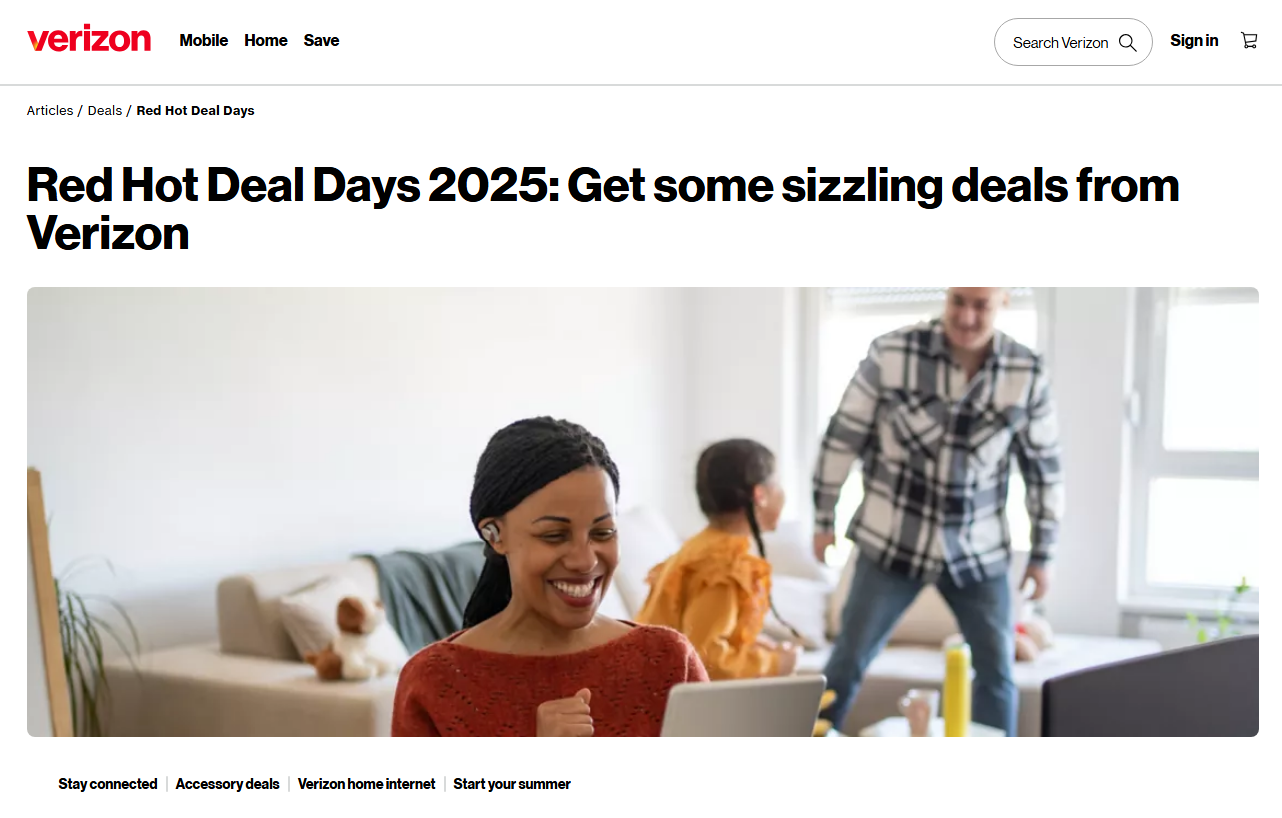
Verizon reps claimed this promotion never existed. The official video below proves otherwise. Watch the original Verizon advertisement detailing the exact terms, trade-in conditions, and promotional pricing they now claim were "never offered."
Verizon Red Hot Deal

📝 Notes of Facts
Verizon Wireless and its authorized dealers engage in deceptive and unfair business practices. Furthermore, when legally challenged, Verizon agents resort to unlawful concealment of records and the fabrication of evidence to evade liability. The following account details a systematic pattern of fraud, overbilling, and bad-faith conduct:
- Fraudulent Inducement: Verizon agents enticed Complainant into migrating their services from their previous wireless carrier through deceptive promotional offers and false pricing promises. The moment Complainant's telephone number was ported to their network, Verizon immediately reneged on the agreed-upon terms.
- Bait-and-Switch Pricing: Verizon unilaterally altered the agreed contract terms, resulting in continuous, systematic overbilling throughout the duration of the service.
- Post-Termination Billing and Harassment: Following Complainant's cancellation of the service, Verizon denied that the service had been terminated and refused to acknowledge that all equipment had been successfully returned. Verizon continued to issue fraudulent billings for ten consecutive months post-termination, while actively threatening me with adverse credit reporting and collection actions.
- Fabrication of Evidence: Once formal legal action commenced, Verizon escalated its misconduct by actively concealing legitimate business records and manufacturing fraudulent evidence to escape liability.
- Retaliatory Corporate Misconduct: Following the formal cancellation of Complainant services, Verizon and its agents engaged in a series of punitive and retaliatory maneuvers designed to inflict financial hardship and evade accountability. Despite explicitly conditioning the porting of Complainant's telephone line on the immediate payoff of the hardware balance and outstanding service fees, Verizon intentionally retained Complainant's business number within their network configuration for two consecutive months post-termination. This willful obstruction effectively frozen Complainant's primary business line, forcing Complainant to incur unexpected out-of-pocket expenses to secure alternative cellular hardware and interim service plans elsewhere. Furthermore, Verizon escalated this bad-faith conduct by falsely denying the physical return of their internet hardware to the physical retail storefront, retroactively generating ungrounded equipment fees to manufacture an artificial default on Complainant's account.
💼 Fabricated Evidentiary Documents
- Fabricated Transaction Channel: Verizon has provided a cellular service transaction receipt dated May 18, 2025, in order to impeach Complainant's claims. The document specifies that the transaction was conducted over the telephone. In reality, this was a physical, in-store transaction executed at an authorized retail location.
- Falsified Payment Records: The receipt alleges that a payment of $100.50 was rendered at the time of transaction. This is demonstrably false; no funds were exchanged or provided by Complainant's. Verizon’s own automated confirmation emails directly substantiate that zero dollars were paid on this date.
- Fraudulent Device Pricing: The invoice characterizes the hardware as a promotional "free" device. To the contrary, Complainant was assessed an actual balance of $1,210.00 for the acquisition of the telephone hardware.
- Absence of Execution and Verification: The document falsely asserts that Complainant executed an immediate service contract explicitly waiving comprehensive insurance coverage. There is no signature on the document to validate this waiver; on the contrary, formal contract documentation was not legally executed or signed until May 20, 2025. False Claim: While Verizon and its agents deny that a "Red Hot Deal" or switcher promotion existed on or about May 18, 2025 to provide a consumer credit framework, public advertising archives definitively and comprehensively refute this denial. Verifiable industry media records establish that Verizon's national "Red Hot Deal Days" event officially launched on May 15, 2025—exactly three days prior to the subject transaction. The widespread existence of this active promotional window is independently documented across major media outlets, including the official corporate newsroom statement at Verizon.com, the global telecom intelligence profile on PRWeb.com, and consumer tech analysis via forbes.com. The presence of this active national campaign explains the administrative application of a trade-in billing template to an account with no physical trade-in hardware, directly causing the systemic billing discrepancy."
📅 Chronological Timeline of Events
- December 30, 2024: Commencement of Verizon Internet services.
- May 18, 2025: An insured iPhone 16 Pro Max was lost or stolen. A temporary cellular device was purchased independently pending an insurance replacement.
- May 18, 2025: Complainant contacted a Verizon telephone representative to obtain network Wi-Fi credentials for the temporary device. Rather than providing the password, the agent pitched a bundled service plan, asserting that combining internet and cellular services would maintain identical pricing, include full device replacement insurance, and qualify Complainant to receive a new iPhone 16 Pro Max at a local retail store the following day while the balance on the lost device was resolved. Relying on these material representations, Complainant consented to port Complainant's business telephone number to Verizon. Upon completion of the porting process, the agent abruptly disconnected the call. Subsequent follow-up calls revealed no record of the agreement, and Complainant was directed to visit a physical retail location.
- May 19, 2025: Complainant visited the Cellular Sales authorized retailer at 3825 S Maryland Pkwy, Las Vegas, NV, and was assisted by representative Franklin Jackson. Mr. Jackson stated that the phone agent's promises regarding the device payoff were unauthorized and that only an $800 bill credit could be applied after 60 days. Because Complainant business number had already been ported and could not be immediately reversed, Complainant was forced to consent to proceed. No formal contract was executed at this time.
- July 4, 2025: A burglary occurred at Complainant's property, and a formal police report was subsequently filed.
- July 5, 2025: Verizon informed Complainant that the accounts lacked the promised insurance coverage. In light of this material breach of contract and the loss of two devices, Complainant sought to terminate all services and returned the internet equipment. Verizon refused the cancellation, citing a mandatory two-month minimum service period for bundled accounts. Complainant requested to be billed for the full two months to satisfy any outstanding obligation and immediately migrated my internet services to Cox and cellular services to AT&T.
- September 10, 2025: Complainant Received an overdue notice threatening immediate collection agency referral, despite never receiving an initial invoice. Although Complainant promptly paid the stated balance, random billing adjustments and invoices continued to generate over the next ten months.
- February 2, 2026: Following numerous unsuccessful attempts to resolve the escalating collections threats via telephone and in-store visits, Complainant successfully initiated a formal billing dispute with Verizon.
- February 3, 2026: Complainant Received a notice demanding payment of unsubstantiated charges within 24 hours under threat of collections. While Complainant successfully halted service billings, Verizon immediately began invoicing Complainant for the equipment that had been returned on July 5, 2025, necessitating a secondary equipment dispute.
- May 7, 2026: Complainant Received a collections referral notice regarding the returned equipment.
- May 9, 2026: Complainant Served formal demand letters to Verizon and Cellular Sales as a prerequisite for legal action, which temporarily halted billing activity.
- June 11, 2026: Having received no response to the demand letters concerning the two iPhone devices and subsequent financial damages, Complainant filed a small claims action in the Las Vegas Justice Small Claims Court.
- June 12, 2026: Initiated communication with Verizon Legal Liaison Dion Morrow, requesting complete transaction records that had been removed from the online account portal, and submitted a formal 21-question disclosure document.
- June 16, 2026: Dion Morrow provided two receipts (dated December 30, 2024, and May 18, 2025). Examination of the May 18 cellular invoice revealed fabricated transaction data utilized to retroactively justify Verizon's actions.
- June 17, 2026: Complainant Received a FedEx shipment containing 18 additional invoices some of which lack foundational merit or business justification and are completely fabricated.
- June 17, 2026: Complainant Launched public informational websites www.verizon.vegas, www.dionmorrow.info and www.franklinjackson.info to document and publicize these practices. Complainant provided the URLs to Mr. Morrow, requesting the retraction of the fabricated receipt. Mr. Morrow declined and stated his intention to introduce the document into evidence in the pending small claims matter.
- June 18, 2026: Complainant Received a demand from Dion Morrow to remove the websites within hours; no legal basis was provided upon inquiry.
- June 21, 2026: Complainant Launched public informational website www.cellularsales.store.
- June 23, 2026: Complainant Filed a formal complaint in the Eighth Judicial District Court seeking a Temporary Restraining Order (TRO) and an injunction to preclude Verizon from introducing the contested document into evidence.
- June 23, 2026: Complainant Amended Small Claims Complaint to add Defendants Dion Morrow and Franklin Jackson.
📥 Digital Evidence Vault & Exhibits
To review and download PDF files, click the corresponding links below.
1. Verizon's Contradictory Documentation
- 🔗 1. Fabricated Receipt Dated May 18, 2025
- 🔗 2. Device Financing Agreement Inconsistent with 5/18/24 Receipt Provision for Complimentary Device
- 🔗 3. $0.00 Down Payment Receipt Inconsistent with 5/18/24 Receipt Showing $100.50 Paid for Device Taxes
- 🔗 4. Fabricated Invoice for the Month Preceding the Commencement of the Contract
- 🔗 5. Fabricated Invoice Dated Months After Termination of Contract
- 🔗 6. Fabricated Invoice for already returned equipment
2. Pleadings & Court Filings
- 🔗 1. Complaint for Temporary Restraining Order & Preliminary Injunction
- 🔗 2. Emergency Motion for Temporary Restraining Order & Preliminary Injunction
- 🔗 3. Appendix 1 to Emergency Motion: Summary of Claims and Analysis of Indicators of Fraud
- 🔗 4. Appendix 2 to Emergency Motion: Itemized Statutory Analysis
- 🔗 5. Exhibits to Emergency Motion
- 🔗 6. Notice of Hearing on Emergency Motion for Temporary Restraining Order & Preliminary Injunction
- 🔗 7. Amended Small Claims Complaint
3. Communications & Correspondence
- 🔗 1. Explanatory Correspondence from Morrow Addressing Disputed Items
- 🔗 2. Unanswered Inquiries Submitted to Morrow Regarding Outstanding Discrepancies
- 🔗 3. Correspondence from Morrow Issuing Takedown Ultimatum
- 🔗 4. Unanswered Request for Legal and Factual Basis Following Morrow's Takedown Demand
- 🔗 5. Verizon Final Notice
- 🔗 6. Cellular Sales Final Notice
⚖️ Core Legal & Statutory Infractions
Based on formal court filings, the operational evidence demonstrates that the named corporate entities and their agents engaged in the following conduct:
- Deceptive Trade Practices: Concealing governing contracts and executing an electronic account lockout.
- Conversion of Equipment: Withholding hardware return data and manufacturing post-termination debt.
- Federal Truth-in-Billing Violations: Implementing non-transparent billing to deny consumer verification.
- Extortion and Coercion: Leveraging unlawful legal threats and aggressive collection maneuvers to force the removal of public-interest consumer advocacy websites.
📂 Pending Actions
To review and download PDF files, click the corresponding links below:
- 🔗 FBI
- 🔗 Las Vegas Metropolitan Police Department
- 🔗 Federal Trade Commission
- 🔗 Federal Communications Commission
📜 Defendants’ List of Federal, State, and Local Criminal and Civil Violations
Federal Statutes & Regulations
CRIMINAL & FRAUD VIOLATIONS
- CONSPIRACY (18 U.S.C. § 371): Making an agreement between two or more people to commit a federal crime or defraud the United States, plus taking at least one physical action toward carrying it out.
- INTERSTATE WIRE FRAUD (18 U.S.C. § 1343): Using electronic communications (emails, internet portals, or phone calls) that cross state lines to execute a scheme to defraud someone of money or property.
- EXTORTIONATE INTERSTATE COMMUNICATIONS (18 U.S.C. § 875(d)): Transmitting a communication across state lines containing a threat to injure the property or reputation of another with the intent to extort money or force an action (like demanding site deletion under a 24-hour ultimatum).
- FALSIFICATION OF RECORDS (18 U.S.C. § 1519): Knowingly altering, destroying, or fabricating any document or record with the intent to obstruct, impede, or influence a federal investigation or matter.
- OBSTRUCTION OF JUSTICE — DESTRUCTION OF EVIDENCE (18 U.S.C. § 1512(c)(1)): Corruptly altering, destroying, or concealing a record or document with the intent to impair its integrity or availability for use in an official proceeding.
CONSUMER PROTECTION & TELECOM RULES
- DECEPTIVE MARKETING AND BILLING (47 U.S.C. § 201(b)): A provision of the Communications Act stating that any unjust or unreasonable practice, charge, or classification by a telecommunications carrier is unlawful.
- FCC TRUTH-IN-BILLING RULES (47 CFR § 64.2401): Federal regulations requiring telephone bills to be brief, clear, non-misleading, and explicitly highlight any changes in service provider or new charges.
- FTC ACT SECTION 5 (15 U.S.C. § 45): The foundational federal law banning "unfair or deceptive acts or practices in or affecting commerce."
State Statutes
NEVADA CRIMINAL & EVIDENCE CODES
- CONSPIRACY (NRS 199.480): A state charge applied when two or more people conspire to commit any crime, or cheat/defraud another person of property by criminal means.
- OFFERING FALSE EVIDENCE (NRS 199.210): A Category D felony for knowingly offering false or forged evidence in any trial, hearing, or legal investigation.
- FABRICATING EVIDENCE (NRS 199.220): A gross misdemeanor for preparing false book entries, papers, or documents with the intent to use them deceptively in a legal proceeding.
- DESTROYING OR CONCEALING EVIDENCE (NRS 199.220): A gross misdemeanor for destroying, erasing, or hiding physical records to prevent them from being produced in court.
- THEFT BY DECEPTION (NRS 205.0832): Knowingly obtaining control over another person's property or money by using material misrepresentations, false pretenses, or unapproved hidden fees.
NEVADA CONSUMER FRAUD CODES
- FALSE AFFILIATION & REPRESENTATION (NRS 598.0915): A deceptive trade practice involving passing off goods/services as those of another, or misrepresenting sponsorship, approval, or affiliations.
- FAILURE TO DISCLOSE MATERIAL FACTS (NRS 598.0923): A deceptive trade practice where a business intentionally fails to disclose a major fact, fails to obtain required local licenses, or conducts business under an unauthorized name.
- CIVIL ACTIONS FOR CONSUMER FRAUD VICTIMS (NRS 41.600): The specific law that grants an individual consumer the right to bring a civil lawsuit to recover damages, court costs, and attorney's fees if they are a victim of deceptive trade practices.
OUT-OF-STATE CONTEXT
- ILLINOIS CONSUMER FRAUD ACT (815 ILCS 505/): The standard Illinois statute protecting consumers against unfair, deceptive, or coercive business practices, including misrepresentation or concealment of material facts.
Local Codes (Las Vegas/Clark County)
- DECEPTIVE FICTITIOUS NAME (Clark County Code Chapter 6.04): Regulations making it unlawful to operate a business using an unapproved, deceptive, or unregistered fictitious "doing business as" (DBA) name.
- DECEPTIVE ADVERTISING (Las Vegas Municipal Code Chapter 6.02): Local municipal rules banning businesses within city limits from using false, misleading, or deceptive representations in local commercial operations.
Administrative and Regulatory Policy
- UNJUST UTILITY PRACTICES (NRS 704.040): Public Utilities Commission of Nevada standards mandating that public utilities provide safe, continuous, just, and reasonably priced services without arbitrary billing.
- ILLINOIS CONSUMER UTILITIES UNIT (15 ILCS 205/6.5): An administrative mandate empowering state authorities to intervene and advocate against predatory billing or unfair practices by utility and telecom operations.
- BBB CODE OF BUSINESS PRACTICES: Private operational standards set by the Better Business Bureau requiring accredited businesses to build trust, advertise honestly, remain transparent, and act with integrity.
🕵 REQUESTED INVESTIGATIONS
Taken together, the foregoing issues raise substantial concerns regarding:
- The authenticity and reliability of records produced by Verizon;
- The existence of missing or withheld account records;
- Contradictory explanations provided during the dispute
- The accuracy of Verizon's billing and insurance representations;
- Whether records were altered, backdated, fabricated, concealed, or otherwise manipulated.
Accordingly, Complainant requests that investigators obtain original records, audit logs, metadata, internal communications, account notes, transaction histories, recordings, and all related materials necessary to determine whether any civil, criminal, regulatory, or administrative violations have occurred and to identify all responsible individuals and consider the following:
Economic Implausibility of Respondent's Narrative:
Any investigative review must address the complete economic absurdity of Verizon's defense. Prior to the subject transaction, the Complainant maintained active carrier service with a comprehensive insurance policy that fully reimbursed the loss of the previous device. For Verizon's narrative to hold true, a consumer would have to voluntarily walk away from a fully indemnified, zero-cost device status, switch to a new carrier, and willingly incur a $1,300 early-termination/payoff penalty from their previous carrier, while simultaneously agreeing to pay an additional $1,200 out-of-pocket for a new device agreement. No reasonable consumer would intentionally orchestrate a $2,500 financial deficit to achieve the exact same service capability they already possessed, less insurance coverage for new device and at a higher monthly payment schedule. This sequence of events is only logical under one factual condition: the Complainant was explicitly assured by sales agents that Verizon's active May 2025 "Switcher" promotion would completely absorb and offset these liabilities—proving that the subsequent uncredited, full-cost billing structure is a deceptive and fraudulent departure from the actual agreement.